Plishner Site Work Trip Report for May 18, 2019

(Editor’s Note: This is Ed Corn’s report of our work at the Plishner radio telescope site during the weekend of May 18, 2019 – Gary, WA2JQZ)


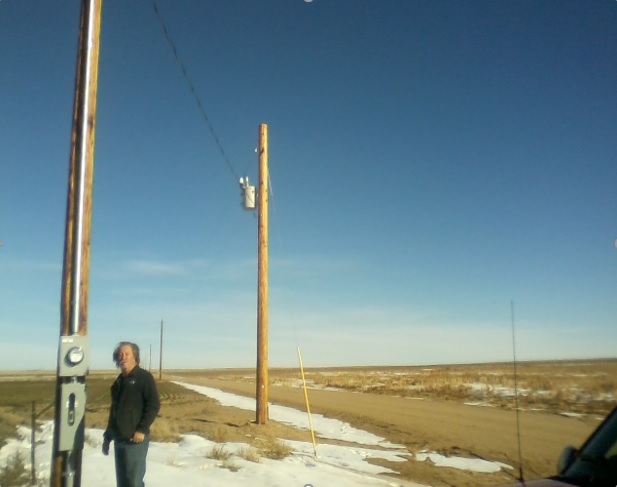
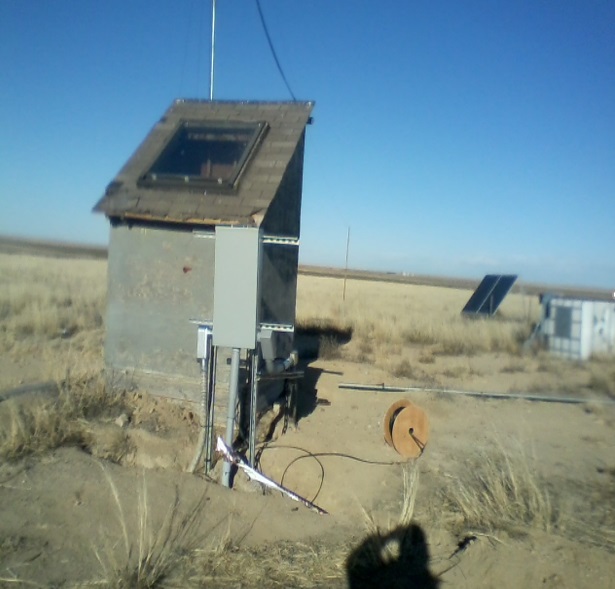
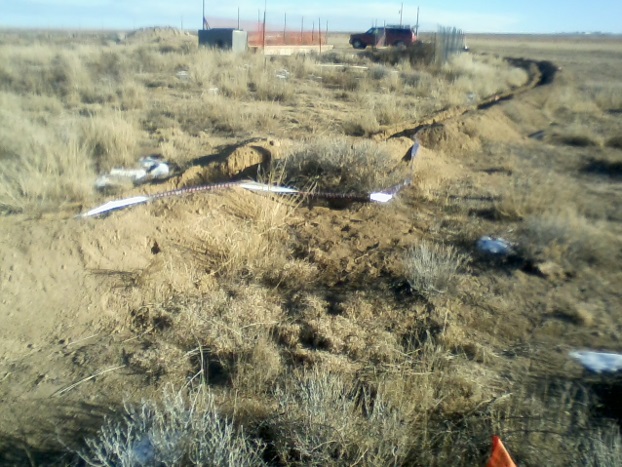
I arrived about 9:30 AM and proceeded to the generator shed to install breakers and to survey the conduit route for 2 extra camper hook ups. The breaker box is ready. I will run conduit and wiring during another trip prior to the open house.


Steve Plock arrived shortly there after. We traveled separately so Steve could stay over with Paul Berge, as I have a graduation to attend on Sunday.
We looked at the ham radio tower project. All the hardware is on site but tower climbing is out for most of us. Steve decided we will assemble the tower on the ground, and tip it up with a winch at a later trip. We need a few extra parts to do this which are easily obtained or fabricated. Gary Agranat arrived and went to work on the vertical antenna. The vertical was damaged during the blizzard storm several weeks ago. He has a list of all needed parts for fixing on the next trip.


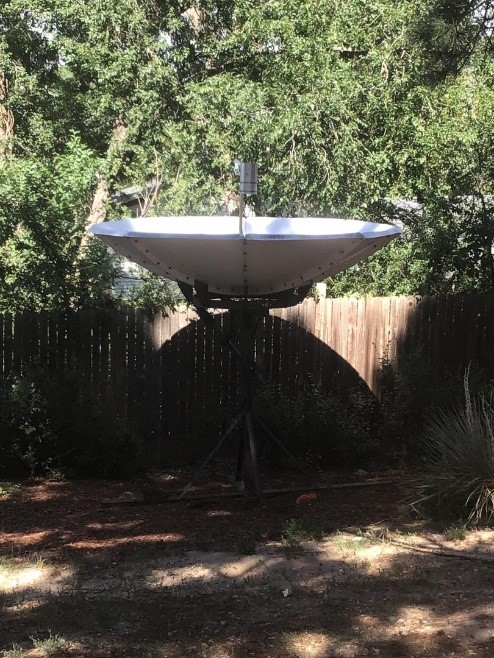
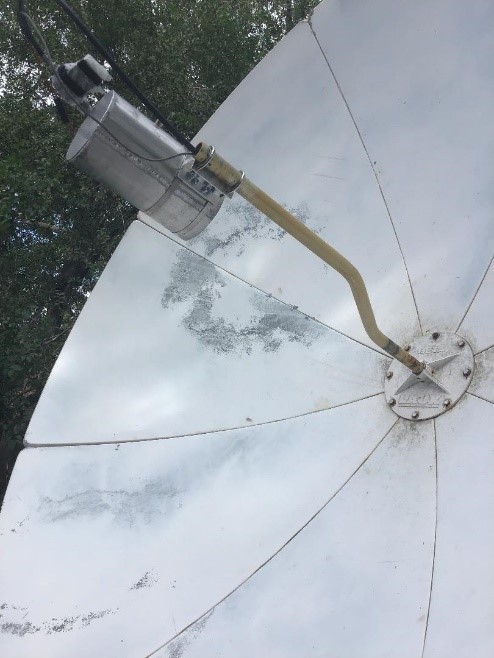
Steve moved the dish to the work stand and checked the control voltage for the feed to the preamps, and adjusted for voltage drop in the line from the communications trailer.


Steve and Gary then worked on tuning the 16o meter and 80 meter wire antennas. (Gary added: We trimmed the lengths to retune the antennas to about the center of the ham bands. The 160 meter antenna was tuned to 1.9 MHz, with a best SWR of 1.7:1. The 80 meter antenna was tuned with an SWR of 1:1 from 3.8 to 3.9 MHz. Before the tuning, each antenna was slightly long, which therefore gave better performance at the low ends of the bands. The retuning enabled better resonance in the phone portion of the bands, where several members like to participate in nets.)


I moved into the bunker and pulled wire for the sub main panel in the battery room, in preparation for the hot water heater for the sink and shower and the sewer pump system. The sub main is complete, ready for extension of the conduit runs on a future trip.


Paul arrived late afternoon and stayed the weekend with several items he wanted to work on.


Ed KC0TBE

Photos by Gary

Plishner 60-foot antenna

Observations using the 60-foot Dish during the Open House, August 11, 2018

Editor’s note: During the DSES Open House on the weekend of August 11, 2018, three receiver systems were tested on the 60-foot dish antenna. Dr. Richard Russel reports on their successful results, and he shows what we see in our data plots. Some highlights to point out:

  1. The Spectracyber definitively observed the neutral hydrogen of the Milky Way as the beam width completely crossed the galactic plane.
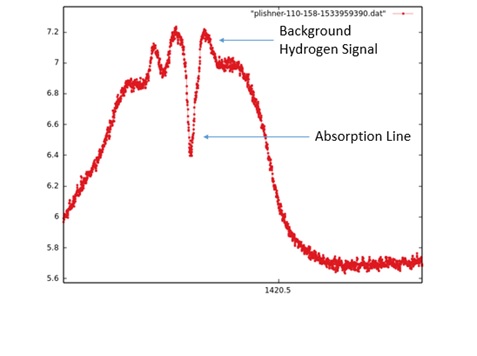
  2. The RASDR4 observed a known neutral hydrogen radio source, which has a closer cloud along the line of sight that absorbs some of the hydrogen signal. The distinctive signal feature is known from published data by the Parkes Radio Observatory in Australia.
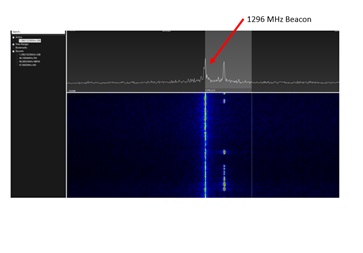
  3. The RASDR2 detected a 1296 MHz beacon set up at the home of a member about 80 miles away.  This is our first definitive detection of a beacon at 1296 MHz.

-Gary Agranat, website editor.


Open House Observations using the 60-foot Dish Antenna

The DSES and Society of Amateur Radio Astronomers (SARA) teams installed three different receivers onto the 60-foot dish during the open house.


Successful Installation and Testing of the DSES Spectracyber Neutral Hydrogen Receiver.

The Spectracyber was installed on the 60-foot dish during the DSES Open House on August 11, 2018.

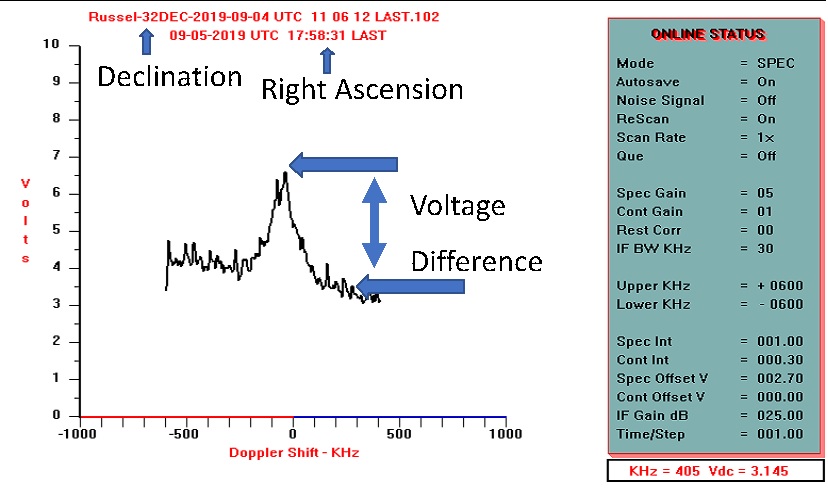
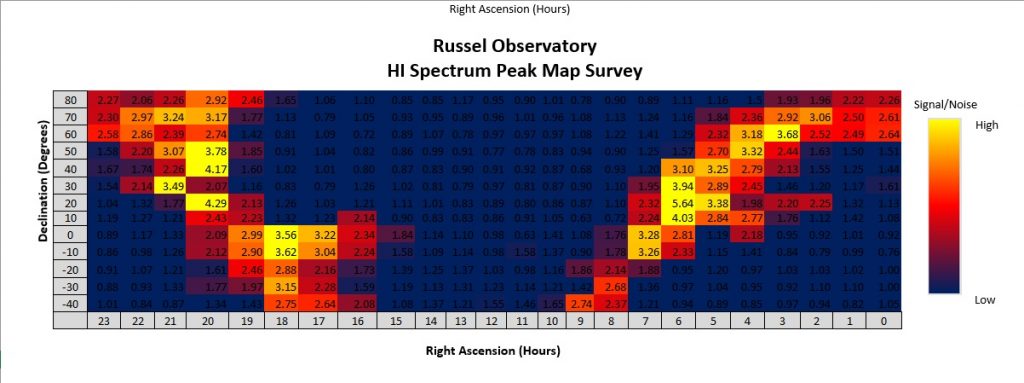
The Spectracyber measures 1420.406 MHz +- 600 KHz. The observation was taken while passing the galactic plane at RA: 19hr 5 Min, Dec: 6 degrees 0 Min.

The observation shows a significant signal to noise ratio as seen below.
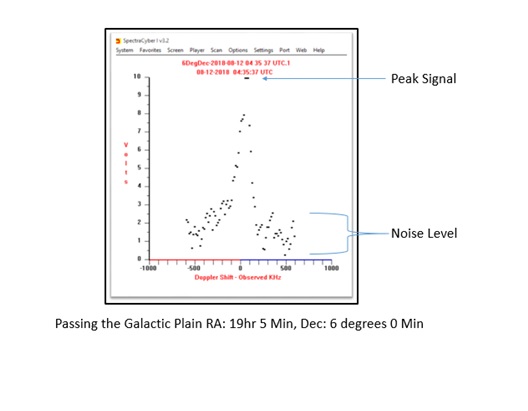
Follow-on observations will allow for measurement of the rotation rate of the Milky Way and Solar System!


RASDR4 Receiver Successful Observation of Hydrogen Absorption Line

Tony Bigbee used his RASDR4 on the 60-foot dish to observe this hydrogen absorption line at RA: 18.15hrs, Dec:-20 deg.

This target is a hydrogen source with a cloud of material between the source and Earth that absorbs the hydrogen energy resulting in a drop off of signal as shown below.
1296 MHz Beacon Observation using a RASDR2

Bogdan Vacaliuc installed a RASDR2 onto the 60-foot dish and was able to observe the 1296 MHZ beacon at Ray Uberecken’s house, about 80 statute miles distance to the west-northwest. This observation helped verify the azimuth pointing accuracy of the 60-foot dish.
 

Plishner Site Report – January 25 & 26, 2018

Steve and I arrived at the site about 9:40 AM Thursday. We energized the main line up to the bunker. We than made the necessary voltage checks for each of the branch feeders and energized the entire distribution system. The Plishner site is now on grid power.

All of the battery packs and inverters are still in service. Reminder that any light or plug  sprayed with red paint is an inverter outlet, any plug or light with no paint on the box is grid power. Be sure to turn everything OFF before leaving the site.

Steve worked with Skip Crilly at Greenbank by phone to turn up equipment and point the dish for the data observations. Steve had everything running for the first observation and continued running until 12:50 PM Friday the 26th. We shut down at that time and removed the equipment for shipment back to Skip for maintenance and upgrade. Steve will ship after returning back. All indications are a successful data run.

Between checking equipment, we added wire to the 160M dipole at the bunker. It is better but needs some extra work. Also filled the wire trench in front of the concrete slab at the top end of the ramp to allow driving on to the slab and not having to jump the trench going in to and out of the bunker. This leaves about 500 feet of trench to fill; We will need some help with this in February.

I also installed a dedicated outlet in the generator shed to feed the LAN switch that is necessary to provide cat 5 Ethernet from the Comm Trailer to the bunker. The last item we covered was moving the WIFI hot spot to the bunker. There is now wireless internet in the bunker. We did not have the manual for the converter from wireless to cat 5 with us to configure the unit. This will be completed next trip to provide internet on cat 5 cable end to end at Plishner. This relocate removed the RF from the hot spot in the Comm Trailer during observation times.

Note: The sump pump in the battery room is on grid power and the front entry way sump pump is on inverter. I will change over to grid power after a wiring change. This will be first order of business next trip.

We secured the site and left about 1:30 PM Friday.

Ed and Steve

DSES 2017 Year End Update and Membership Renewal

December 22, 2017

To all Deep Space Exploration Society (DSES) Current and Former Members:


I want to wish everyone a Merry Christmas & Happy New Year! Today marks the first day of our 2018 membership dues drive. Our organization relies on annual membership dues to fund most all of the DSES projects at our Paul Plishner Radio Astronomy and Space Sciences Center near Haswell, CO. Annual dues for voting members, continues to be $50.00. For those who wish to be involved as non-voting members the price is $20.00. Those members who have recently joined within the past 3 months (October-December) will be credited for 2018. Annual elections of board members/officers will be in late January. You must be current on your dues to vote in the elections.


You can pay your dues on the DSES web site (DSES.science) by credit card or PayPal. You can also mail dues to the following addresses:

DSES,
4164 Austin Bluffs Parkway #562,
Colorado Springs, CO 80909-2118


Your canceled check, Paypal receipt or credit receipt will be your acknowledgement of your dues paid. If you want a separate receipt signifying payment, please note that with your payment and I will mail you a receipt. PLEASE INCLUDE YOUR CURRENT MAILING ADDRESS, EMAIL ADDRESS AND CONTACT PHONE NUMBER. Also let me know if you DO NOT want this info to be released to the general membership. I would like to pass this membership information containing email addresses and phone numbers out to all members.

Please read the attached DSES 2017 Highlights written by Bill Miller, your Secretary. He did a fantastic job in covering the great success we had in 2017.

Please feel free to email or call me if you have any questions or if you have a change of any contact information, email, phone or snail mail.


Thank You and have a great 2018 New Year;

Myron F. Babcock; DSES Treasurer

[To contact Myron, please use the email address dsestm{at}gmail.com . ]

Read our Deep Space Exploration Society 2017 Highlights.

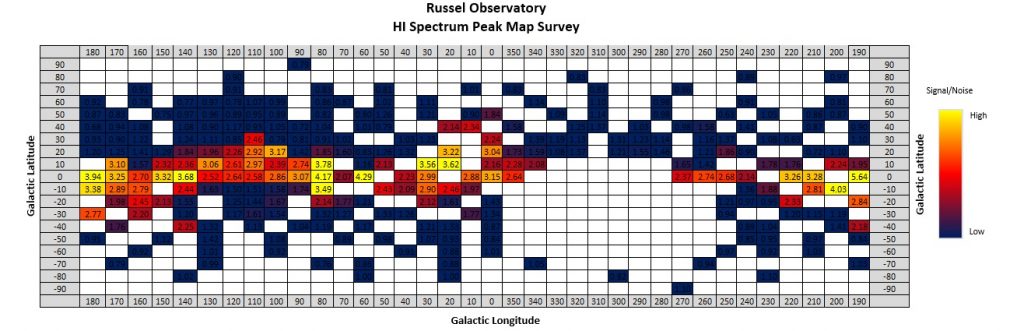
Preliminary Baseline 420 MHZ Celestial Drift Scan Survey, December 2016

Here is my fist shot at a survey! A lot of things I can fix for next survey, planned for after Christmas.

1) Will have a 15dB preamp installed on mast
2) Will raise frequency to midrange of antenna sweet spot (435 MHz)
3) Will do a better alignment of antenna

This was fun!!!!!!

Rich

Dr. Rich Russel
drrichrussel@netscape.net

Link to Preliminary Baseline 420 MHZ Celestial Drift Scan Survey, December 2016: 420-mhz-drift-scan-survey-rev-4

New Milky Way H Map – Incredible Detail

Sky & Telescope has a short, illustrated news item today about high resolution 1H (atomic hydrogen) observations of our galaxy from Australia and Germany. It includes a video showing how the view changes with wavelength due to Doppler shift. I thought this would be good to share; this is what we’ll be looking for with the HI drift scans.

Astronomers Map Millky Way in Incredible Detail – Sky & Telescope

Read the Sky & Telescope article.

Science Update 9-3-16

Radio Jove and SuperSID Data and Analysis Reports

Attached are the August reports for the Radio Jove, located at Plishner, and the SuperSID, which is located at my house.

1) The Radio Jove observing season is closing down with only an hour of observing time a day after sunset. We did get a couple of probable hits.

2) SuperSID did detect an M1.3 flare on 8 August. I also conducted a comparison of the Radio Jove results and the SuperSID results. I found no significant correlation between the two telescopes. The lightning storms this month also affected both telescopes by adding a lot of spurious signals.

I have been in contact with the Radio Jove NASA coordinator. He likes what we are doing and has provided information to improve our Radio Jove system.

DSES SuperSID Results August 2016
DSES Plishner Radio Jove Results August 2016

Dr. Rich Russel
DSES VP and Science Coordinator
drrichrussel(at)netscape.net